Go to Making Light's front page.
Forward to next post: Catalogue retail
Subscribe (via RSS) to this post's comment thread. (What does this mean? Here's a quick introduction.)
From today’s Washington Post (via Daily Kos):
General: Americans Must Stop Iraqi AbusersBy WILLIAM C. MANN
The Associated Press
Wednesday, November 30, 2005; 3:19 AMWASHINGTON — The nation’s top military man, Marine Gen. Peter Pace, said American troops in Iraq have a duty to intercede and stop abuse of prisoners by Iraqi security personnel.
When Defense Secretary Donald H. Rumsfeld contradicted Pace, the general stood firm.
Rumsfeld told the general he believed Pace meant to say the U.S. soldiers had to report the abuse, not stop it.
Pace stuck to his original statement.
“If they are physically present when inhumane treatment is taking place, sir, they have an obligation to try to stop it,” Pace told his civilian boss.
…
Pace, chairman of the Joint Chiefs of Staff, was asked what orders the troops have to handle such incidents [abuse of prisoners by Iraqi troops]. He responded: “It is absolutely the responsibility of every U.S. service member if they see inhumane treatment being conducted, to intervene, to stop it.”
He said soldiers who hear of but don’t see an incident should deal with it through superiors of the offending Iraqis.
That’s when Rumsfeld stepped to the microphone and said, “I don’t think you mean they have an obligation to physically stop it. It’s to report it.”
Pace then repeated to Rumsfeld that intervening when witnessing abuse is the order the troops must follow, not just reporting it.
Do you know what we just saw? We just saw the Chairman of the Joint Chiefs of Staff tell the Secretary of Defense to sit down and shut up. In public. In front of reporters.
To review the bidding:
Pace: “It is absolutely the responsibility of every U.S. service member if they see inhumane treatment being conducted, to intervene, to stop it.”
Rumsfeld: “I don’t think you mean they have an obligation to physically stop it. It’s to report it.”
Pace: “If they are physically present when inhumane treatment is taking place, sir, they have an obligation to try to stop it.”
This is bigger than you can imagine. Rumsfeld has lost the US military. There’s nothing left for him but to resign or get fired.
Atrios speculates here that it will be Pace who loses his job rather than Rumsfeld.
I'm liking Pace a lot. Via Rosemary for Rembrance, have you seen this? I particularly like "I'm not trainable today," when Rumsfeld tried to teach Pace not to call Iraqi insurgents...insurgents.
And notice that Pace did not specify abuse by Iraqi troops. Any US soldier who sees any inhumane treatement has an obligation to intervene to stop it.
Pace will probably be fired real soon.
Whether Pace goes or whether Pace stays -- Rumsfeld is no longer effective. His troops are in open revolt.
Lenny: Very probably. Consider, though, that the head of the armed forces has decided to take this stand in public, even though he's sacrificing his career. The message going up the food chain is very stark: "We, the armed forces of the USA, oppose you, Donald Rumsfeld, on this issue. We oppose you so much that we will make you fire or imprison us rather than submit."
While this is not a mutiny, this has a resemblance to the English Navy's rather formulaic mutinies in the early 1700's; or to peasant revolts in feudal Japan. The leaders often got killed (particularly in the Japanese case), but the complaints were heard, often at a very high level.
Lenny - Given what happened to Shinseki, if Pace rocks the boat, he's out on his ear. Will he rock the boat? I have no idea, but I'm betting he won't, and the whole thing will blow over media-wise, while everyone in the know will understand that most real commanders (the ones who are not REMFs as my military friends call them) hate Rumsfeld with a passion, but continue to do the job in front of them without rocking the boat.
I swear to god the man is the biggest phony to ever walk the planet. Have you heard him speak? The whole charming grandfather routine with the "my goodness" and "gracious me" bits makes me want to vomit all over him.
Pace probably will get fired, and if he does, I can't imagine the situation will get better. Can you be a martyr while still alive? We're about to find out...
Well, as you would expect of someone that would be picked by the Cheney administration for the big chair, Pace supports this war and thinks we can win it. But he seems to have his own mind in regard to what is and is not acceptable. From the November 7 News Hour interview:
JIM LEHRER: There was a -- the U.S. military announced today that five Army Rangers are charged with abusing some captured Iraqis. What did they do? What's the allegation?GENERAL PETER PACE: I do not know the specifics of that allegation. I do know they were charged. That is under investigation right now. It would be inappropriate for me to voice an opinion especially as chairman of Joint Chiefs of Staff -
JIM LEHRER: Sure.
GENERAL PETER PACE: I can tell you categorically that any maltreatment of any detainees by U.S. forces or coalition forces is totally unacceptable -- that our orders have and will continue to be that we will treat everyone in our charge with -- humanely and with respect.
JIM LEHRER: Sen. McCain has been - the Senate has passed - it has yet to be approved by the House, a legislation that would use the Army manual as the rules for how to treat prisoners, detainees. And he said that it was necessary because we have changed the rules so often that the average U.S. troop over there doesn't know what he is, he or she is allowed to do at any given time. And he said this: He said that, let me find his quote here. He said, "U.S. personnel don't know what's permitted or forbidden." And he said and "when something goes wrong we blame them and we punish them and we have to do better than that."
Do you support what he is doing? Do you support the legislation to make the Army manual the rules and so everybody knows you don't beat up on people, you don't torture them, et cetera?
GENERAL PETER PACE: I would say that the members of the U.S. armed forces understand clearly what they are allowed to do and what they are not allowed to do with regard to treatment of prisoners and detainees and they understand that they are to treat them humanely.
Having said that, it is perfectly fine to have the Army field manual for the detention of individuals, as the bible, so to speak, of how we are supposed to be doing business. That's exactly what it is. And for the senator to say that we should be following our own rules certainly makes sense.
JIM LEHRER: Again, I would not try to get you to comment on this case of the five rangers, but just generally speaking, for a U.S. soldier, Marine, sailor, whatever, to claim that he or she didn't know the rules about how to treat a captured Iraqi, you just wouldn't buy as a general premise, right?
GENERAL PETER PACE: I would not buy that as a person in uniform and I would not buy that as an American citizen.
If Rumsfeld was surprised by this yesterday, he hasn't been paying attention. This is what you get when you put a Marine with combat time in charge.
And Josh, it is one thing to announce someone's sucessor early to undercut them (Shinseki was scheduled to retire in 2003 anyway) and another to try to remove a Chairman who has just taken the job -- especially the very first Marine. Pace probably has better connections in the five sided madhouse than Rumsfeld. If you want a real revolt, pull something like that.
Another thing to consider --
All military appointments at the three star level and further north require congressional review and approval. Any bets on how well Pace (and his staff) know the members (and staffs) of the various defense and appropriations comittees of both Houses? Bush is not popular any more, and Rummy was never that popular at all. Lots of congresscritters are facing election within a year and may well prefer to be associated with Pace than Rumsfeld.
I would like to take this moment to nominate "congresscritters" as the best new word to be born to the public at large on Making Light since "Disemvowel".
I have a new word, and I will use it with much vigor and smirking. Thank you, Claud Muncey.
Karl, I can't accept blame or credit for "congresscritter". The term has been around for quite a while, so I doubt that there is a copyright problem. Use it all you want, with my compliments.
Er, Karl, I don't think it's all that new. I used it, for example, at my place on March 26, 2003.
Nonetheless, it's a wonderful non-gender-specific word, whoever coined it.
'congresscritters' is a Pogo word, from the pen of Mr Walt Kelly. I applaud its resurgence.
And three cheers for General Pace! 'Bout time.
Congresscritter. God I loath that term. If it wasn't born in the one of the "all government is hopeless corrupt" schools of thought, it surely should have been. It serves on every level to demean and dismiss, on the one hand, the idea that government can ever be a tool in which good people can do good things, and on the other, the idea that one ought to expect good things out government generally or the congress specifically. You don't look for help from "critters" and you can hardly hold them to account for not rising above their natures.
Damn, why did it have to be a Staff Officer? If he was in the line, that was an order.
Damn.
Shame that we know *exactly* what Rumsfeild has to do, and quickly. Here's hoping he can't figure it out.
Might be worth looking up the rest of the story out of Haiti several years ago - IIRC a soldier (Army not Marine) left his post by a few feet to intervene inside a building - but also lost sight of his post - at least the first level Court found an obligation to report but to not intervene under the circumstances.
The question on my mind: if Rumsfeld doesn't quit, and the CEO President doesn't fire him, what will the Chairman of the Joint Chiefs of Staff do about it?
"Whether Pace goes or whether Pace stays -- Rumsfeld is no longer effective. His troops are in open revolt."
They're not brandishing their weapons yet, so there's still something— I won't call it hope.
GENERAL PETER PACE: I can tell you categorically that any maltreatment of any detainees by U.S. forces or coalition forces is totally unacceptable -- that our orders have and will continue to be that we will treat everyone in our charge with -- humanely and with respect.
What crack has this man been smoking? Who's running Gitmo?
Oh yeah, that'd be the US Armed forces. waterboaring, sleep deprivation, sexual abuse, 'stress positions', cold water treatment, religious harrasment. And more.
Is it just me, or does Pace have a different version of the word "humane" than the rest of the planet? Or did he somehow manage to miss what we're doing in Gitmo?
I don't think anything will come of his dissent. It looks too staged to mean anything real.
My memory isn't that good or contemporary reports were slighted or perhaps both. The case I was thinking of above just about has to be:
Captain LAWRENCE P. ROCKWOOD II
United States Army, ARMY 9500872
CARTER, Judge:
A general court-martial composed of officers convicted the appellant, contrary
to his pleas, of failure to go to his appointed place of duty, leaving his appointed
place of duty, disrespect to a superior commissioned officer, willfully disobeying a
superior commissioned officer, and conduct unbecoming an officer in violation of
Articles 86, 89, 90, and 133, Uniform Code of Military Justice, 10 U.S.C. §§ 886,
889, 890, and 933 (1988) [hereinafter UCMJ].1 The court-martial adjudged a
sentence of dismissal and forfeiture of all pay and allowances. The successor convening authority2 disapproved the finding of guilty of conduct unbecoming an
officer, approved the remaining findings of guilty, and approved a sentence to
forfeiture of $1500.00 pay per month for two months and a dismissal. This case is
before the court for automatic review under Article 66, UCMJ.
Appellant raises six assignments of error, all of which we decide against him.......
Just the same Captain Rockwood seems to have made a point with some people:
Stephen Wrage
Center for the Study of Professional Military Ethics, U.S. Naval Academy, Annapolis, MD, USA.
...
This teaching case study poses classic questions about following orders versus
serving one's conscience. It tracks the actions of Captain Lawrence Rockwood,
an intelligence officer with the Tenth Mountain Division of the United States
Army, who was sent to Haiti in September 1994 as part of the mission to oust the
dictator Cedras and put the elected Aristide in power. Captain Rockwood felt that
his conscience, his humanitarian duty and international law all required that he
inspect the National Penitentiary where, intelligence reports showed, political
prisoners were being tortured and murdered. His chain of command was unanimous
in refusing him permission to inspect the prison and in directing that he do
nothing that would endanger fragile relations with the peacefully departing
Cedras regime. The case is intended for use in courses on force and justice, for
ethics and leadership classes at military academies, at chaplaincy schools and
seminaries or in classes on law of war and international law, civil-military
relations, peacekeeping and new missions for the military.
.....
Certainly as I read it this case (and others) stand for [not implying a precedential effect for this particular case] a duty to report and once having reported there is no general duty to intervene even if a superior is later criminal in action or inaction as the facts may be.
I have no doubt that Rumsfeld has lost the trust and support of the military; unfortunately, he has the support of the V-P, which appears to be all important in the Bush White House. I hope Claude is right, that removing Pace would cause a "real revolt." Though I have no idea what that would look like...
I particularly like "I'm not trainable today," when Rumsfeld tried to teach Pace not to call Iraqi insurgents...insurgents.
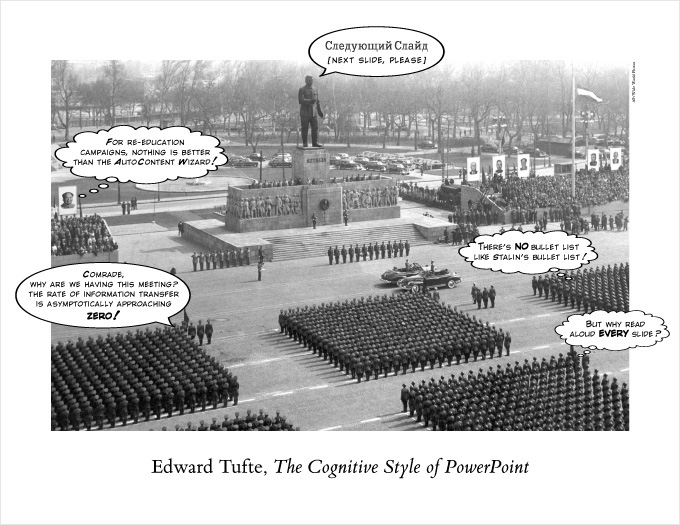
By my count, the all-bullet-points-all-the-time National Strategy for Victory in Iraq refers to "insurgents" or the "insurgency" no less than 23 times. (And have you ever seen "bullet points" used in a more appropriate context?)
Is it just me, or does Pace have a different version of the word "humane" than the rest of the planet? Or did he somehow manage to miss what we're doing in Gitmo?
It's not just you. I was wondering the exact same thing.
I don't think anything will come of his dissent. It looks too staged to mean anything real.
I don't think it's staged, but I also don't think it will lead to anything. I doubt it will be all that widely reported in the mainstream media, for one thing (I hope I'm wrong on that one).
It serves on every level to demean and dismiss, on the one hand, the idea that government can ever be a tool in which good people can do good things, and on the other, the idea that one ought to expect good things out government generally or the congress specifically.
Well, yeah. That's why I like it. Never forget, every action by a government agent has, at it's core, the promise that if that agent is disobeyed, eventually another government agent will come and shoot you. Government is force. If the only way you can get people to support your program of social reform or charitable aid is by threatening to kill them if they don't do what you tell them, you're probably not the best person to administer that plan.
"His troops are in open revolt."
Doesn't anyone else see this as at least as serious than the specific issues, here? So far our military has been loyal in the face of appalling civilian leadership. But...Iraq...is it possible? Could this war drive our military to revolt?
Revolt?
Hold to their principles and uphold what they swore to uphold, more like.
Well, Julius Caesar probably thought he was doing something very similar when he did his thing. That's been one of my larger worries about this whole Bush fiasco, that the generals would get tired of being ignored and having their soldiers wasted on dumbass stunts and pull a military coup. After all, it'd just be temporary, y'know, until they could put the country back on track and return it to the staunch republican values of our forefathers. That always works, doesn't it?
Oh, wait, no it doesn't. Military rule is a genie that's damn hard to put back in the bottle, but it can be really tempting to folks who are used to having people do what they're told without question, and not all of the folks in the upper military echelons are as fond of the subordination of military power to civilian authority as they used to be. US military culture has been getting more and more separate from civilian culture over the last 150 years, and a lot of the brass are from military families and have been part of that military culture since before birth. We're profoundly alien to them, and it's very easy to just opt for violence as a method of dealing with the alien.
So, Joe, the government is a gang of thugs whose arbitrary rule is enforced at gunpoint, and the military is an alien culture which might take over from them any minute.
Let's see, how do you feel about public education?
Fluoride in the water?
Tinfoil hats?
Ayn Rand?
UFOs?
Pi?
Well, there's another seven years to go yet until the Coup of 2012. Funny; that predicted a military takeover in the wake of a gradual expansion of the military's civilian duties - law enforcement, transport, disaster relief and so on - although, on rereading it, I notice that the triggering event was "the wretched performance of our forces in the Second Gulf War" - this written in 1996! - and a loss of faith in Congress.
Think about when revolutions happen - in 1919 in Germany, in 1917 in Russia.
"Never forget, every action by a government agent has, at it's core, the promise that if that agent is disobeyed, eventually another government agent will come and shoot you. Government is force. If the only way you can get people to support your program of social reform or charitable aid is by threatening to kill them if they don't do what you tell them, you're probably not the best person to administer that plan."
You skipped a step or two there. It isn't just government that depends on threat, it's practically everybody. There are people who say they won't do violence themselves because they depend on the police to do it for them, but that's just hiring it out.
Say you take a gasoline can and go into a church during services and say, "I'm going to burn down this building and I'll get it done before the police can get here.". Do you think anybody will try to stop you? Maybe some quakers wouldn't, but there's an old quaker tradition of "Pardon me kind sir, but thou art standing where I am about to shoot.".
I've hardly ever thrown anybody out of my house with physical force or overt threat of physical force, but that's because I'm very tolerant and also I tend to get visitors who're civil. Government isn't the only one that threatens. It's just the biggest that makes a point of threats.
And government doesn't just threaten. Government generally depends on cooperation, and often acknowledges that directly. Even when the rules are explicitly stated as threats to those who don't cooperate, often that is just a sort of bluster by the people who can't imagine anyone disagreeing, and those threats are not particularly enforced. People often organise cooperation using government because that's one of the tools available.
If you decide ahead of time that it's all about force, then there's usually some biggest force that throws its weight around. If not a government then a mafia. And when there isn't a biggest force there are two are more large forces that are more-or-less evenly matched, and when they disagree it's like the public is ground between millstones. When you think in those terms there's nothing else whether there's an official government or not. You get to choose whether you give legitimacy to a government or else regard it as a mafia. You get to choose whether to secretly oppose a government and hope the next one will be better for you. But there's no respite.
If you want something better you'll have to create it in your own mind, with some better idea. Start with the idea that it isn't only about force, and maybe there will be room for something else.
"Congresscritters" -- given Walt Kelly's Pogo was peopled with critters, did he use the term in the pejorative?
I see from his bio that Rumsfeld is one of the few Bush administration members with any military service at all; but I was mistaken to think he had combat experience. He was a Navy pilot and flight instructor in 1954-57 and in the Reserves after that; so he managed to miss out on both Korea and Vietnam.
I'm sure Pace knows that.
Consider: General Pace is a Marine, the first Marine to hold the Chairmanship of the Joint Chiefs.
Congressman John Murtha is retired Marine Colonel, and ranking member of the Armed Services Committee of Congress.
Alex Merz: regarding bullet points, this seems particularly appropriate -
http://www.edwardtufte.com/tufte/graphics/home_stalin_poster.jpg
This so-called "pi" is a MERE THEORY which at its heart is nothing more than a GODLESS COMMUNIST PLOT. For as all right-thinking people know, the Bible CLEARLY STATES in 1 Kings 7:23 and 2 Chron. 4:2 that the ratio of a circle's circumference to its diameter is THREE, no more and no less. Not two, neither is it four; five is RIGHT OUT.
(Did I use enough CAPITAL LETTERS for authenticity?)
Of course Rumsfeld's a naval aviator. He's an arrogant, unteachable egotist who fetishises technology, ignores criticism, despises ground troops, and thinks you can win wars with go-faster stripes and air power.
Naval aviators are not all like that - it's just that these are the bad personality traits that they sometimes acquire, just as infantry officers can become hidebound, over-cautious, unwilling to reorganise and obsessed with mass over manoeuvre.
And aviators go deaf, while infantrymen get creaky knees.
Portuguese Angola is, I suggest, the most useful recent example of a disgusted army in a modern country. The soldiers rather than the army did go home and turn the government (Salazar) out of office mostly to good effect. Didn't do Angola a lot of good.
On the other hand there is a whiff of the worse the better here and beware the fury of the Legions is a very old warning.
On the gripping hand, I would continue to argue as I suggested supra that Rumsfield was precisely correct in a technical or legal sense as might be expected from his history.
This implies a different ground for the disagreement. I'd like to think Chief Warrant Officer Hugh C. Thompson represents the best of the American soldier (grounded his bird and prepared his door gunners to fire at Americans) but he wasn't the majority opinion at My Lai.
The vote of the Legions is I suspect still out.
If they were legions, that is military bodies raised by a particular general (holding other civil rank) and dependent on him for their pay, bonuses and retirement package, then I too would fear them once he and they came into conflict with civil authority.
The question is, how paramount is the civil authority? That is to say, the government of the United States?
Clark: came pretty close in France in '61-62, too. OAS? Tanks on the streets of Paris? People expecting 'les paras' to drop onto the Champs-Elysees in revenge for the abandonment of the pieds-noirs and the harkis in Algeria? The Bastien-Thiry conspiracy? The Generals' Putsch and the seizure of Corsica?
Algeria is an interesting case - are there any current patterns of car horn blowing to match Algerie Francaise? That might be an indication of general involvement? [there may be ways to indicate rhythm and emphasis here but I don't know what they might be] Opposition in the United States to Vietnam shared some common chants - Ho Ho Ho Chih Minh Ho Chih Minh is sure to win - I don't see anything like that currently.
I don't remember that abandoning the pieds-noirs was quite so important as abandoning what was in some sense the frontier of opportunity in a France recently fought over. Sort of we can't give it up I don't have mine yet. It was a complex time and place.
A Foreign Legion is readily distinguished from a citizen soldier (see George Washington on the subject). Indeed I think Dr.Pournelle is correct. If we are to be a competent Empire we need a Foreign Legion here and the lack is a sign of incompetent Empire to the extent we are an Empire.
Considering the Legion and les paras differed greatly even on pace to march in review (smiley) I don't think the military was applying force in line with itself let alone with civilian desires.
I think that Pace is being given a bad rap, here. He did not make any statement about what is currently happening at Gitmo or elsewhere. What he said was that it is the responsibility of every soldier to not merely report but to actually intervene in instances of inhumane treatment. That kinda covers Gitmo, really. Not only are those service people failing to intervene, they are actively participating in committing inhumane treatment. Note that his comment does not limit this to Iraq, either.
This is an interesting game being played out at an extremely high level, and I don't know very many of the moves, but it is obviously a high-stakes game. Why did Pace put his butt on the line? Who has political capital, and how much? As Bush's popularity falls, Rumsfeld's power drops. As the popularity of the war drops, Rumsfeld's power drops even further. Who has what kind of political capital? What alliances have been made?
This isn't chickenshit. This is a major event. I'm certain I don't know what comes next, but I can sure tell what it means: the Armed Forces have had it up to fucking here. I'm not worried about a military coup. A huge majority of the Armed Forces actually approve of democracy, and I believe they will defend it. My guess is that they would go through the impeachment process. Who gets to lay articles of impeachment against the president? We are an established democracy, and for all of our cynicism, it still means a great deal to most of us. We've never had even a breath of a possibility of a military coup. Hell, the closest we've ever come to a turn-over of power by the use of force was in Florida in 2000. That was a terrifying precedent, but note it didn't include any armed servicement at all.
I think that what we're seeing is the Bush administration finally overstepping its bounds so far that it's running into the real government. They were so arrogant that they thought that all they needed for control were political appointees who were beholden to them. Have you ever worked for a boss who was so bloody incompetent that the only way to get things done was to ignore him? This is kind of like that. While the Bushies play around upstairs, the governmental wheels grind away. If they get caught between those wheels, they are ground up, even if they did have the illusion of control.
Redefining the United States Marine Corps is taking place in the background. Notice the extent to which the Navy is going to replace the function of fleet Marines with a new naval infantry.
It is not just the band that has been "The President's Own" see e.g. Tripoli to Central America for using Marines to fight undeclared wars or project power or pick your own words.
As the light infantry wave of the future the Marine Corps seems to be in process of pick one - cutting apron strings/declaring its independence mostly of the Navy certainly establishing a new identity.
I'd agree with the pundits who are suggesting that interpretation of emphasize the unique identity on the interpolated sir.
This so-called "pi" is a MERE THEORY which at its heart is nothing more than a GODLESS COMMUNIST PLOT. For as all right-thinking people know, the Bible CLEARLY STATES in 1 Kings 7:23 and 2 Chron. 4:2 that the ratio of a circle's circumference to its diameter is THREE, no more and no less. Not two, neither is it four; five is RIGHT OUT.
Not only that, but these "mathematicians" will even ADMIT that they can't tell you PRECISELY, EXACTLY what Pi is! Infinite number of digits, my foot. There's only ONE thing that is truly infinite, and that is THE LORD.
Clark - are you quite all right? That last post was...syntactically complex. The last para was downright incoherent. I honestly haven't the foggiest notion what you were trying to say.
I think that what we're seeing is the Bush administration finally overstepping its bounds so far that it's running into the real government. They were so arrogant that they thought that all they needed for control were political appointees who were beholden to them.
Very true, and very important.
This has happened before -- consider what would have happened if Nixon, in his last month in office, called that anonymous major or lieutenant commander waiting just outside into the oval office and tried to issue an execution order for OPLAN 1000. I have no doubt that this would have been checked first with the Secretary of Defence, and would have been quietly ignored. (The double check is normal procedure -- emergency war orders are to be issued jointly by both the PotUS and SecDef, not by the President alone, despite what all the novels say. The "Two Man Rule" on nukes operates all the way to the top.) Shortly afterwards, Vice President Ford would have invoked Section 4 instead of Section 1 of the 25th Amendment, as Nixon would have been residing in a quiet locked room in Bethesda.
You ignore the permanent government at your own risk.
They were so arrogant that they thought that all they needed for control were political appointees who were beholden to them.
And comfortable, because the electorate didn't seem to care/notice/vote.
tried to issue an execution order for OPLAN 1000. I have no doubt that this would have been checked first with the Secretary of Defence,
There was a standing order that any instructions concerning the military from President Nixon were first to be confirmed by the Secretary of State/Defense (don't remember which) because Nixon was experiencing paranoia because of the steriods he was taking.
Some useful bits of information:
1. The military is a mannered, semiotically nuanced universe. Staged dissent is no less real for being staged.
2. Refusing to obey Rumsfeld doesn't automatically mean the military is in a state of mutiny. All the members of the U.S. Armed Forces have sworn (or affirmed) that they will support and defend the Constitution of the United States against all enemies, foreign and domestic, and that they will bear true faith and allegiance to the same. What comes after that differs, depending on whether they're officers or enlisted personnel. The differences are interesting. Have a look.
3. General Pace was speaking prescriptively when he said that if members are physically present when inhumane treatment is taking place, they have an obligation to try to stop it. Regrettable recent events may explain why he found it necessary to make that statement, but they don't nullify it.
4. As noted, Rumsfeld has no combat experience. He also has little or no experience of commanding troops. He was a pilot.
Onward.
James Angove, I don't share your loathing of "congresscritter", but I'll wholeheartedly join you in despising the idea that all government is inherently corrupt. That belief empowers the incompetent, the self-seeking, and the wicked, and is a calumny upon our democratic government and the public servants who make it work.
Joe Crow, was Civics not a requirement at your high school? I ask this with reference to your statement that:
"...every action by a government agent has, at it's core, the promise that if that agent is disobeyed, eventually another government agent will come and shoot you. Government is force."Historically, that's been the basis for many governments, but not the one you live under. Yours is based on the mutual consent of the governed, and on the individual's inalienable right to life, liberty (as in "nobody owns you," rather than "nobody can tell you what to do"), and the pursuit of happiness.
By mutual consent, we elect representatives to a central federal government and to our local governments. By mutual consent we tax ourselves to provide for our various needs -- defense, infrastructure, and the well-being of our citizens, mostly. By mutual consent, we fund police, firemen, EMTs, prisons, and the judicial system.
Mind you, all that mutual consent is the mutual consent of the community, assuming that what they consent to doesn't infract other laws or your own LL&thePoH. Our entire system of government doesn't get renegotiated if one individual withholds consent.
You also don't get to opt out. That used to be possible, long ago and on another continent. If you decided you weren't subject to the law, you could be declared an outlaw (funny how that works), at which point you reverted to a state of nature in the eyes of the court and your neighbors. Being outlawed meant you were kicked out of the community, and declared to have no rights anyone else was bound to respect. The usual outcome was that you died.
Bearing that in mind, let's consider your scenario where, if you disobey one agent of a government, it necessarily follows that another agent of that government will eventually turn up and shoot you. I've heard that one before. The first time, I think it was, "If you don't pay your traffic tickets, eventually the state will send someone to kill you." I'll go with the traffic ticket version. It's as good as any.
So, let's say you get ticketed for offenses against the commonweal (which they are; driving is an inherently cooperative activity, and traffic laws are all about safety and the public good), but you don't pay them. The penalty for doing this is not death. Usually it's additional fines. Depending on your jurisdiction, further penalties can include towing, booting, putting a lien on your registration, turning your case over to a private collection agency, suspending your license, and putting out a warrant for your arrest.
Since you're a middle-class white guy with a buzz cut, pretty much the only way you can get shot by an officer of the law is if you get violent first and then get violent second: say, assaulting the guys who operate the tow truck, or tussling with the police when they try to take you in on a warrant, and then escalating into "credible threat" range when you're told to freeze, put your weapon down, and come along quietly.
Could you start with unpaid traffic tickets, and end up getting shot? You could -- but you'd really have to work at it, and what you'd actually get nailed for would be assault plus immediate threat of further life-threatening mayhem. Meanwhile, the root offense underlying all your troubles would be, approximately, "refusing to acknowledge that you live under the same rule of law as everyone else."
State of nature: no fun. That's why human societies stop living in it, as soon as they figure out that there's another way to go.
I believe Alexander Haig sent around a "reminder" to a certain level of officer in the armed forces not to take any orders outside the chain of command. There was some not unreasonable fear that Nixon might attempt some kind of coup - putting himself in power as dictator rather than president. He was Nixon's Chief of Staff.
Haig was later famous for saying "I'm in control here" when Reagan was shot. He was Sec'y of State at the time, so technically he was wrong. But since George Bush the Elder wasn't present at the time, he may have prevented a certain amount of chaos with his "blunder."
State of nature: no fun. That's why human societies stop living in it, as soon as they figure out that there's another way to go.
Or as a great man once said, "The whole point of having society is to be less unforgiving than nature." The same one who first used the word 'disemvowel', as far as I can tell.
I suspect this is not a coincidence.
There was a standing order that any instructions concerning the military from President Nixon were first to be confirmed by the Secretary of State/Defense (don't remember which) because Nixon was experiencing paranoia because of the steriods he was taking.The way I heard this story, Schlesinger (when he was SecDef) sent a message to commanders with nuclear weapons instructing them to confirm any presidential orders with him first. However, I heard this as an offhand anecdote (not sure where at this late date), so I won't vouch for its accuracy.
Sorry some of the type scrolled out of the box as I was cutting and pasting and I hit post without adequate preview - looked for changes but not hangovers - because I had to run - my apologies.
The most recent but perhaps not last obscure post as a whole was in response to:This is an interesting game being played out at an extremely high level, and I don't know very many of the moves, but it is obviously a high-stakes game. by Lydy Nickerson.
My point is that one of the games currently being played is the ever green purple suit
(what you get when you blend all the colors of the services to make one defense department)
versus the pickle suit.
(some sort of wordplay intended brown shoe jokes invited)
The Marines are in the midst of finding/making of themselves an independent and increasingly important service.
In the context it has been suggested the sir is an explicit, almost insulting, reminder that the very first Marine Chair of the Joint Chiefs is not a creature of the Pentagon but of the military - a rifleman
(my duty assignment is flying jets but what I am is a rifleman)
not a technocrat. Marines have not traditionally been creatures of the Pentagon, leaving that role as they have to the Navy. That is, there is some feeling around for a new role here.
I think there is some large and long term foreign policy significance in taking the President's Own - the ability to Send the Marines away from him. This does not necessarily imply a broader disagreement between the current administration and the services. There may be a broader disagreement but perhaps for a Marine to distinguish himself from the Administration is in this case peculiar to the Marines and not the the Armed Services.
Lydy - I think what he said can be stretched to cover Gitmo if you choose to look at it that way, but it's by no means a specific comment that what happened at Gitmo counts as abuse, which has been the administration's claim. It's "Enhanced Interrogation Techniques".
Pace has not gone far enough for me to consider him heroic, nor do I see the military in anything resembling revolt. I think what comes next will be more of the same, and that Pace's dissent is not of great consequence in terms of any real change in the way things are run, and the relationship between Rumsfeld and the military.
Optimistic people said the same thing about Shinseki and Zinni. I remember hearing how the dissent they had was a big deal, and that it meant something in erms of a conflict between the military and Rumsfeld. Both Zinni and Shinseki sunk without a trace in the public perception.
I'm a cynic, and not an optimist about this, but I have some good reasons for being cynical.
What I do see is that the military, not the Bush administration, has been responsible for *any* real progress in Iraq, both with the transitional government, with the Iraqi citizens, and with the Iraqi military.
What I think you will see is that, as the Iraqi forces, as Bush put it "stand up", our military will be watching them to make sure they follow real rules of conduct.
This is the kicker. It's going to be hard (but not impossible) for a Saddam-lite to set up shop while US forces are observing them. Pace and others have made it clear that they won't tolerate such a thing.
And US forces, from the basest grunt, won't put up with it either.
A soldier who's blog I read, who's fairly conservative, was *outraged* that someone's car that had liberal stickers was vandalized. She's literaly risking her life in Iraq for what she considers to be the essence of freedom and democracy. She won't tolerate it's abuse. And I'd bet she wouldn't tolerate the abuse of that by an American supported strongman in Iraq.
The real danger that Rumsfeld faces is that our forces will do too well in setting up a real democracy in Iraq, and won't rest until they actually get one.
One of the reasons I've been staying on the sidelines of the whole "Bring the troops home NOW debate is that bringing them home now would mean installing a Saddam-lite to take over, and I know that's not what our troops want.
They want to finish the job in front of them, and then go home (gratuitous Sam Vimes reference). And they don't want to go home with the job half done. But Rumsfeld would be happier with a Saddam-lite than a real democracy, because a real democracy involves us training the Iraqis on how not to torture.
Torture is a popular thing in the middle east among governments. I don't know of one that dosen't use it in some form or another. Getting them to stop is not going to be easy or cheap.
what impresses me about Pace is that he's got the guts to say that it's our responsibility to try and make sure it doesn't happen even if it means using force against our allies.
Now that thought has to have Rumsfeld worried, if he's considered it. Imagine a US soldier intervening in prisoner abuse that really is sanctioned by one branch of the Iraqi government or another. It'd be quite the scandal. It'd also call in to question the stability and morality of the Iraqi government as a whole.
Now *that's* dangerous.
Will it happen? I think not. But remember. Cynic.
BUT. Prior instances of military figures standing up to Rummy happened when the administration had high approval among the Great Unwashed. It may be a different thing at 37% than at 68%, or whatever it was.
I've spent my life overcoming the cynicism I was raised with, and replacing it with skepticism. I will wait and see, but while I breathe, I hope.
Further to Joe Crow, though Teresa said most of what I would have, and said it well:
I suppose there is, in some sense, a threat of violence behind what government does. I don't see that "we will use force, if necessary, to prevent you from entering your neighbors' home without their consent and stealing their jewelry, destroying their furniture, or harming their children" is an evil statement.
Further to the traffic ticket example, if it takes an armed agent of the commonweal to prevent someone from driving while dangerously intoxicated, or at 100 kph the wrong way on a divided highway, well, it's a shame that someone's native sense didn't stop them first, but let's hear it for the police officers who are out there saving us all from J. Q. Random's stupidity.
No, not all actions of government officials are beneficial--they're human, like the rest of us, and thus flawed. But not everything that can be argued to involve a threat of force is thereby evil, nor is all nonviolent action virtuous.
Teresa: What comes after that differs, depending on whether they're officers or enlisted personnel.
That's more than interesting. Do middies and plebes never actually swear to obey the POTUS, or do they swear an oath of enlistment at matriculation? (If the latter, the officers' oath's addition of duty to the enlisteds' obedience leaves a lot of room to argue about what duty is.)
Chip - I asked my husband, who is enlisted currently but has been selected for officer programs. The enlisted oath does not swear obedience directly to POTUS, mostly because enlisted personnel's orders do not come to them directly from POTUS. Like everything else in the military, it boils down to pecking order. They swear to obey the orders of the officers appointed over them, which technically includes POTUS as commander-in-chief. They typically take this oath immediately before shipping out of MEPS for training.
Pace/Rummy, military revolt, democracy:
I wish General Pace all success in his truth-telling. I'm sorry about Gitmo, and I don't know how he reconciles that with his belief.
The military chain of command doesn't have to revolt openly. Passive officiousness slows action to a crawl.
Regarding Pace's job tenure, I keep thinking of the Saturday night massacre. (Nixon to AG: Fire the special prosecutor. AG: I resign. Nixon to deputy AG: Fire him. Deputy: I resign. The 2nd deputy fired the special prosecutor.) The great unwashed understood this. Firing Pace may improve Rummy's life in the very short term, but not in the long term.
Where democracy figures in, in addition to all that has been said so well above, is that we, the unwashed, know that the wind is going to change. Some of Congress are going to be gone by the end of next year. Bush et al. will be gone at the end of 2008. There's no point in trying to overthrow a government whose end date is on a calendar. It's much simpler to hunker down and wait.
This talk about whether or not the threat of violent retaliation is at the basis of society reminds me of when hate-crime laws started getting some teeth to them these last ten years. Conservatives would parrot each other, spewing out the code phrase you-can't-legislate-morality.
I always thought that was a stupid thing to say, especially coming from the law-and-order types. I would have liked to ask them what purpose the Law has other than legislating morality.
I would have liked to ask them what purpose the Law has other than legislating morality.
Um, property rights: securing, codifying, clarification and publication thereof. I have a theory that laws which do not at some basic level settle a property-rights ('property' being very broadly defined, and including one's own person) issue are those most likely to end up unenforced or recognised as oppressive and overturned on those grounds.
Serge writes: I would have liked to ask them what purpose the Law has other than legislating morality.
The answer would probably be nonsense. Anybody using that phrase is either 1) being disingenuous with it, or 2) completely ignorant of modern moral philosophy and theory of conduct.
Coincidentally, Orcinus has posted on the topic of hate crimes recently. His opening paragraph may be relevant to where this discussion is heading:
Have you ever noticed how, when libertarians and right-wingers talk about "threats to our freedoms," the only source of those threats is the government?
(I also note for the record that vigorous dissent to the Peace of Westphalia continues in some quarters...)
ObTopic: Yes, I realize this comment is contributing to the ongoing thread drift. My apologies.
Ah, the Saturday Night Massacre. There was a great button that appeared immediately afterward: FIRE THE COX SACKER.
Property rights do fall within the domain of morality, pericat. After all, is it moral for someone to take what is mine without any compensation?
Serge: Is it moral to keep property if you've purchased it from, or been given it by, someone who stole it? I'm speaking of much of North America, of course.
Re the Saturday Night Massacre, it astonished me to learn that the guy who ended up doing the firing was Robert Bork. Somehow I missed that connection back when his confirmation hearings were going on.
Serge:
I would have liked to ask them what purpose the Law has other than legislating morality.
Pericat:
Um, property rights: securing, codifying, clarification and publication thereof. I have a theory that laws which do not at some basic level settle a property-rights ('property' being very broadly defined, and including one's own person) issue are those most likely to end up unenforced or recognised as oppressive and overturned on those grounds.
"Possession is nine-tenths of the law." Contrary to its colloquial usage, it actually means that ninety percent of law is about property rights.
I agree that almost all crimes are really property crimes, assuming that you believe that a person's body is their natural property and cannnot be held or altered against their will.
I don't see why morality needs to be legislated for the most part. Major immoral acts, such as murder, theft, rape, assault, and so on, seem to be covered by the theory that people own themselves, and their property. (I'm simplifying the property part, but high finance is kinda beyond what I'm able to tackle at one in the morning.) What other immoral acts should we legislate against? I know that a lot of churches want to legislate how and who people can screw, but I completely fail to see why the government needs to have any part in it. It's late, what morally culpable acts should the government have laws about?
One of the problems I see with the "property model" is that I don't see how traffic laws fit, and I'm pretty sure they're a damn good idea. I can make taxes and special assessments for sewer and so on fit into the property model (ownership is shared between the individual and the government which holds it in trust for the common good, or something like that), but I don't think that you can claim that behavior that doesn't cause immediate harm, like speeding, has any basis in property rights. The other problem with this model is that the word "property" has come to mean something very different from what you are talking about -- assuming we are on the same wavelength.
I've never looked it up, but I'm told that not only did Proudhon say, "Property is theft," but also, "Property is necessary," and "Property is impossible." I guess it's a koan, but I find it expresses a lot of how I feel about the whole issue of property.
Let's see, how do you feel about public education?
I think the public oughtta be educated, and in most available cases, when left to their own devices, will do a good job of educating themselves. I know I did. Overwhelming majority of the stuff I learned came from reading on my own.
That, and eating smart folks' brains.
Fluoride in the water?
Waste of time and money.
Tinfoil hats?
Ayn Rand?
Mediocre writer, worse philosopher. Had an occasional good idea, but tended to express them poorly.
UFOs?
They make pretty lights
Pi?
I like pecan-pumpkin pie.
Historically, that's been the basis for many governments, but not the one you live under. Yours is based on the mutual consent of the governed, and on the individual's inalienable right to life, liberty (as in "nobody owns you," rather than "nobody can tell you what to do"), and the pursuit of happiness.
That may be what it says on the paperwork, but there's a lot of wiggle room in the fine print. Those rights are plenty alienable if somebody rich or powerful wants your land or doesn't like what you put in your body or what you read. Yeah, there's paper defences you can use, but they're only as solid as the green paper you can stack up behind 'em.
By mutual consent, we elect representatives to a central federal government and to our local governments. By mutual consent we tax ourselves to provide for our various needs -- defense, infrastructure, and the well-being of our citizens, mostly. By mutual consent, we fund police, firemen, EMTs, prisons, and the judicial system.
Mind you, all that mutual consent is the mutual consent of the community, assuming that what they consent to doesn't infract other laws or your own LL&thePoH. Our entire system of government doesn't get renegotiated if one individual withholds consent.
If you can't say no, how does that qualify as consent? Can't say no, can't leave (no place to go), what else is there but sullen aquiecence? Yeah, the threat of violence is sufficiently delegated that in most cases it's nearly invisible, but that doesn't mean it's not there.
If a government body does a crappy or malevolent job, it doesn't go away. It might get restructured, and a couple of stooges might get reassigned if they step on somebody big's toes or if somebody small attracts the attention of somebody big, but that's the way it is with any coercive power structure. If you can get the right nobleman's attention or if the local capo tries to skim too much from the pot, yeah somebody bigger might step on him. That doesn't make you free.
Since you're a middle-class white guy with a buzz cut, pretty much the only way you can get shot by an officer of the law is if you get violent first and then get violent second: say, assaulting the guys who operate the tow truck, or tussling with the police when they try to take you in on a warrant, and then escalating into "credible threat" range when you're told to freeze, put your weapon down, and come along quietly.
"Middle class"? Heh. No, blue collar welfare kid. No, really my collar's blue and everything. And yeah, now that I know most of the cops hereabouts from pumping their gas every night for the last 11 years, I'm much less likely to get the same ration of shit they dish out to everybody else. Doesn't mean a thing outside the city, and it doesn't mean a thing to my not-so-respectable-looking friends and family members.
So, yeah, I'm polite and friendly with the police sergeant who's polite and friendly back, but I still remember him breaking my long-haired friend's nose on the hood of his car for walking around at 3 in the morning.
Could you start with unpaid traffic tickets, and end up getting shot? You could -- but you'd really have to work at it, and what you'd actually get nailed for would be assault plus immediate threat of further life-threatening mayhem. Meanwhile, the root offense underlying all your troubles would be, approximately, "refusing to acknowledge that you live under the same rule of law as everyone else."
So, yeah, if I actually defend my property or personal liberty, yeah, I might get shot. That's one of the reasons my boss usually says to just give the guy with the gun the money. Sometimes, I just can't. Yeah, that's nearly gotten me shot or stabbed occasionally, but sometimes I've gotta push back and say "Fuck no, you're not getting the money in the drawer."
Yeah, as long as I'm willing to roll over for whoever's got the gun, whether they've got a badge or not, I'll probably live. And yeah, as a responsible dad, most times I've gotta roll over to keep food and roof for my daughter. That doesn't mean I can't dream of a freer world for her to grow up in. And that doesn't mean that social administration based on coercive force isn't wrong. So I'm an idealist. There are worse things to be.
State of nature: no fun. That's why human societies stop living in it, as soon as they figure out that there's another way to go.
Well, when we do, sign me up. That's what I'm working on, too. But what we've got now is just the State of Nature with the big rock hidden behind somebody else's back.
Hey, that got kinda long. Sorry about that, and my apologies for the continuing thread drift. I just like you guys, and I'd like to have you get a vague idea what I'm talking about.
...we, the unwashed, know that the wind is going to change...
[snark]Let me know, so I can be downwind.[/snark]
(I love this msgboard!)
Serge: Property rights do fall within the domain of morality
Indeed, but it does not follow that morality should itself be the domain of law. If you write a law that says no one can possess or use X because it is immoral, then right away anyone who does not share your moral convictions, whether or not they like playing with X, will not have much stake in abiding by your law, or persuading others to do so. They won't call the police if they see their neighbours carting X around, grilling X on the patio, etc. "Their patio, their X, their nastified grill; no business of mine."
OTOH, if (whatever your personal convictions) you write a law that prohibits use of X in populated areas because it tends to depopulate them, then, provided that's true, even people who like setting fire to X over long weekends will be more likely to abide by your law and assist in enforcing it.
Lydy Nickerson: One of the problems I see with the "property model" is that I don't see how traffic laws fit
I thought traffic laws, at least the ones that last, are written for the purpose of allowing people to use the (commonly owned) roads as much as possible without harming each other, or each other's belongings. Drunk driving isn't illegal because it's immoral to be drunk, frex.
Traffic laws created solely to increase revenues, despite whatever lip service they pay to 'safety' or 'public good', IME are generally scorned, and in some cases (small town speedtraps in Texas) have been eventually dismantled.
I agree, pericat. My morality wouldn't necessarily be the same as my neighbor's. My society's morality wouldn't that of the country next door. But within the society where 'I' belong, there are some laws that must be obeyed if the society is to function and endure. Like, if I'm at an intersection, I do NOT go thru when the light is red.
Heck, I'm not sure what I'm getting at. The coffee hasn't kicked in yet, I guess. What I originally was trying to say something like this...
Yes, it IS legislating morality when someone comes up with a law that says it's no more OK to beat up a homosexual than it is to abuse one's wife. But eventually, that law becomes part of the moral code.
I'm probably digging myself in deeper. Drat.
It works a lot better if you stipulate that morality is personal and does not extend to the social, which is the province of law and manners.
Those can exist to maintain all things as they now are, or they can exist to foster increase in access to choice, or they can exist to demand conformity to a particular ideal. (Those are about the only three known-stable options.)
Laws, once accepted as a means of producing moral conduct, degenerate into a coercion contest. I regard this as an excellent reason to not legislate on the basis of morality at all.
"...Laws, once accepted as a means of producing moral conduct, degenerate into a coercion contest..."
I don't know, Graydon. It's not coercion when one's Society says that thou shalt not beat up your wife nor your homosexual neighbor. Well, it IS coercion (in the same manner that we're bigots in the bigot's eye when he's not allowed to act upon his bigotry), but of the kind I can live with.
Alex Merz asks me if it's moral to keep property if you've purchased it from, or been given it by, someone who stole it. Yes, if I know it was stolen. With one exception... It's OK if stolen from anybody working for the current Administration.
Serge --
It's fine to say "don't do that". It's not fine to say "don't do that; it makes Baby Jesus cry", even when it's the same thing, because that hauls in the (unanswerable, intensely personal, unquantifiable) question of what Baby Jesus wants, instead of "does this contribute to the general weal?" or "is this required to be consistent with our stated principles?" or similar at least marginally concrete concerns.
Also note that coercion isn't the same thing as a coercion contest; the later is an arms race to see who can get their views most effectively enforced. They're really, really bad ideas, because instead of merely wasting ability and effort, they convert ability and effort into damage. (Frequently unrecoverable damage.)
'Alex Merz asks me if it's moral to keep property if you've purchased it from, or been given it by, someone who stole it. Yes, if I know it was stolen. With one exception... It's OK if stolen from anybody working for the current Administration.'
okay, well, I think you messed up in your first Yes.
But in your ending OK I would be in agreement. But then I would probably also take it further than that.
Serge, I take it from the context of your post of 9:20 that you mean it's immoral to keep property you know was stolen?
"This isn't chickenshit. This is a major event. I'm certain I don't know what comes next, but I can sure tell what it means: the Armed Forces have had it up to fucking here."
From the later commentary I think we can see that it isn't clear what it means.
I remember back in the old days, we didn't know what was going on in the Kremlin, and every little change in formulaic wording in speeches, eyebrow twitches, minor protocol violations, they all got interpreted as shifts in the soviet power structure. Russians and interested americans both speculated endlessly on what it meant, both being powerless to affect it. It was some concern since the russians were The Enemy, but they didn't actually do much. They invaded afghanistan, and they supported an active intelligence service that gave minor aid to revolutionary movements, and their subs played tag with our subs. But it seemed like whenever anything kind of drastic was going on like Flight 007 it was a lot closer to their borders than to ours.
Somehow I miss those days.
Oops. Yes, bryan, Aconite... I did mean that it's immoral (in my own opinion anyway), unless the property was stolen from the current Administration (also in my own opinion)...
"Psst... I've got office supplies from Rumsfeld's own office. Interested in some post-its?"
"I would have liked to ask them what purpose the Law has other than legislating morality."
There are some moral stands that almost everybody agrees with. In general it's better for people to live than die. It's better to have more wealth and more choices available than otherwise. It's better to avoid stupid destructive accidents.
There are a few religious zealots who disagree with all of these. It's better to die for the cause than to live. Better to live piously and humbly than be rich and corrupted by material goods. Better to accept the will of god than to blame things on stupid accident. But most people most of the time do agree with this morality.
Lots of other things are not generally agreed. We have accepted that pornography should be regulated by local standards. We accept that evolution should be taught or not taught by local standards, and the cases where we get upset come when whole districts or states try to decide how everybody will do it.
We as americans have not agreed that people may enforce local standards more generally. We think ethnic cleansing is generally bad. But driving out the evil outsider is a common moral action, and people aren't happy when they have to live close to evil outsiders and get along with them.
A lot of our current problems come from american racists. Liberals thought that racists were being immoral for being racist. We got laws passed that destroyed their property values and forced their children into private schools that were expensive but not very good. We told them at length they were immoral and they had to change.
We imposed our local community standards on them. They made 'liberal' a dirty word and they helped take over the government and now when we complain about them doing things that aren't fair they remember how we treated them and they laugh at us. Payback.
I don't have a solution. I don't know what we should have done instead, or what we can do now. But some ways things go smoother when the laws trail the morality rather than lead it. The legal system seemed to work as a tool for social change, and now the guys we wanted to change are pushing back.
Again, I don't have a solution. Katherine McLean's The Missing Man pointed out an alternative that had its own problems.
Joe Crow:
Well said.
-another of the sullenly acquiescent
"It's OK if stolen from anybody working for the current Administration."
There's a slippery-slope potential here.
This is what the looting in iraq was about. The citizens stole everything they could get from the former government, and as a result it was hard for the new government to get organised. (But then, the more continuity they had with the old government, the more they'd carry-over the bad habits of the old administration. It might have been better to tear down the old buildings and start over with brand new people who learned their administrative skills outside the country. If we could just get enough of them quick enough....)
If it's OK to steal from the government, what about getting government contracts and then just not delivering? Are our corrupt contractors doing the right thing?
Slippery slope.
To ease back closer to the topic,
per Claude Muncey:
This has happened before -- consider what would have happened if Nixon, in his last month in office, called that anonymous major or lieutenant commander waiting just outside into the oval office and tried to issue an execution order for OPLAN 1000. I have no doubt that this would have been checked first with the Secretary of Defence, and would have been quietly ignored. (The double check is normal procedure -- emergency war orders are to be issued jointly by both the PotUS and SecDef, not by the President alone, despite what all the novels say. The "Two Man Rule" on nukes operates all the way to the top.) Shortly afterwards, Vice President Ford would have invoked Section 4 instead of Section 1 of the 25th Amendment, as Nixon would have been residing in a quiet locked room in Bethesda.
So let's review how this applies to the current situation. Such an order, or any order, would have be be reviewed by both Rummy and the Shrub. That's like saying my decisions have to be reviewed by me and myself. But wait! Section 4 could then be invoked by--woops!--President Cheney, from a secured, undisclosed location, to countermand an order he gave in the first place anyway.
Does anybody see how the current administration has already gotten around any safeguards against its insanity there may have been? The SecDef and the real CEO already march in lock-step, and The Smirker is simply a figurehead. He's been residing in a quiet locked room on Pennsylvania Avenue since September, four years ago.
Regarding the "hunker down and wait" theory, it's easy enough to do, especially when equipped with blinders, earplugs, and enough booze. But I'm concerned about how much additional damage can be done in our foreign affairs, and to our treasury, in the next three years.
In your wild ass dreams-lol
Yes, I know, J. It'd be a slippery slope.
To tell the truth, I would NOT accept property knowing it was stolen from Rummy or Dubya or Dick or... Hell, if I saw one of them about to get run over by a truck, I'd probably try to get them out of the way.
Which probably makes me a sucker.
Hell, if I saw one of them about to get run over by a truck, I'd probably try to get them out of the way.
Oddly enough, so would I. But if I were not present, and heard later that they got run over by a truck, I'd dance the Dance of Joy. And be happy that I wasn't there to save them.
That's very strange. And I'll have to think about what it means.
It's not fine to say "don't do that; it makes Baby Jesus cry"
Graydon, are you saying that you consider it perfectly acceptable to slice raw onions next to Baby Jesus? Fie.
As I understood it, Prohibition was the prime example of how legislating morality doesn't work. A person or group of people can believe something like drinking is immoral (a debate unto itself) and therefore should be illegal, but if the grand majority doesn't believe that drinking is immoral, and drinking becomes illegal, then you've got a problem. Morality (supposedly) guides the opinions, but it is the general consensus that creates legislation. Laws in America, IMHO, are grease to help us interact with the least amount of friction, not instructions on How The World Should Be.
To try to tie it into the original topic, what was seen was the conflict between what someone believes and what we all have agreed upon is right. Pace is trying to enforce the law as written whereas Rumsfeld wants the law to be interpreted through his own version of morality. If the Nation (losing it's collective mind) were to decide that torture, in xyz circumstances, was okay, then I'd guess Pace would have to enforce that. I'd like to think he'd resign first though.
Julie L. --
Should the actual, physical, tangible Baby Jesus happens to be right there on the counter top where you're slicing onions, the injunction is entirely reasonable. The injunction on behalf of the abstract, absent Baby Jesus as postulated by one's interlocutor, on the other hand, is objectionable.
Crooks and Liars has the Pace/Rummy video now available here:
http://www.crooksandliars.com/2005/12/01.html#a6137
"...Prohibition was the prime example of how legislating morality doesn't work..."
And the War on Drugs too, yes. But what about the legal remedies to the following? Segregation. The glass ceiling. Gay-bashing. Domestic violence. And probably a few other issues that don't spring to my mind right now.
Well if the onions are frozen then no problem.
There are many kinds of laws and bills in many kinds of legislatures. FREX there is the fetcher bill - fetches lobbyists. There are laws which exist to outlaw things so the state can sell licenses to break the law - some licenses to park in no parking zones are cheaper at the precinct or individual officer level.
Describing all States as ruling by force and further suggesting there is a sense in which all rule by force is rule by fraud - cf civil disobedience - is a sometimes useful way of looking at the problem of the state.
We can describe the Declaration of Independence and the Constitution (as amended) as a concensus consent of the governed/social contract among those subject to the jurisdiction. Doesn't make it easy to find Roe v. Wade in the document or to exclude a right to keep and bear arms from the document but people do it all the time. This suggests no simple description embraces the whole notion of the people or the state. I've been known to say that if I wouldn't strap on my own guns to enforce a given law then it's a bad law by my lights.
Is it moral to keep property if you've purchased it from, or been given it by, someone who stole it? I'm speaking of much of North America, of course.
Why do we just say this about North America? Did the peoples of the rest of the world get their land in a different fashion? Or did it just happen so long ago that no one cares?
Laina: yes. Some of us had ancestors who moved in as the ice thawed away. It's possible that someone was displaced by the ice, I'll admit, but by then we're back to 100+ kYA, and I'll say that's long enough that no one cares.
Serge -
It doesn't matter what the issue is because morality and laws are not the same thing. If someone breaks a law they are not morally corrupt. I believe that's one of the themes of "Les Miserables". Valjean isn't a bad man, but he has broken the law which Javert is trying to uphold.
What I'm hearing is that you believe the laws are solving moral dilemmas. What I'm trying to say is that the laws are solving rights issues. To use your examples, Segregation was removing legislation preventing peoples rights to go wherever they want. The glass ceiling is preventing bias against an individual. Gay-bashing and domestic violence is supporting an individual's right to not be assaulted or making the penalties for such assaults higher as a deterrent. The moral issue is seeing all persons as equals, but the laws can't force that to happen.
I don't believe that you can force someone to be a "good" person. Isn't that what the Neo-Cons are trying to do by outlawing abortions? From their moral standpoint, abortion is murder (not just Christianity either, sections of Taoists and Buddhists also reject abortion on the basis of destroying life). Whether or not abortion is moral or immoral is immaterial because not having it legal is more of a detriment to society than having it illegal (unwanted children abused, back-alley clinics, coat hangers, etc). If our society decides that the benefits of abortion are outweighed by the deficits, it will become illegal.
How we perceive an individuals rights are governed by morals, however, and I think because they are so closely associated, the issue becomes muddied.
Graydon: does this contribute to the general weal?
Even that can be bent by the crying-Baby-Jesus crowd; observe that the attacks on gay marriage concentrate the alleged destruction of the family. In my observation, \most/ morality arguments are presented with twists that claim they're practical.
J Thomas: We got laws passed that destroyed their property values and forced their children into private schools
Uh.... They \moved/ to private schools when they were told the public schools were public, rather than their exclusive property. That they still resent this does not make their resentment any less uncalled-for -- or any less of a problem for "us"
They \moved/ to private schools when they were told the public schools were public, rather than their exclusive property.
And some of them still have problems with how 'dark' the student population is, at various state universities (I heard this said WRT San Francisco State; ymmv).
Check out the Dec. 5 issue of The New Yorker, to see what some people are telling Sy Hersch about the military, the war, and the President. It discusses several topics raised earlier in this thread, and others. According to this article, Bush saw the Republican sweep in 2002 as a sign from God.
J Thomas: We got laws passed that destroyed their property values and forced their children into private schools
Uh.... They \moved/ to private schools when they were told the public schools were public, rather than their exclusive property. That they still resent this does not make their resentment any less uncalled-for -- or any less of a problem for "us"
[sigh]
You're arguing that it's OK to make laws to enforce your morality which a large part of the population doesn't share, this time, because this time you're right.
I'm saying we got problems from it just like we did from Prohibition. Some ways it was good because people who wanted to be nonracist but who didn't want to stand up to social pressure all by themselves, got to say they were only obeying the law. But we got a whole lot of people who felt like the law was there to persecute them. And when they got the chance they were happy to return the favor and make laws to persecute us.
The people who set up Prohibition thought they were acting in the practical best interest of society. They thought alcohol had tremendous social costs. They blamed alcohol for spouse abuse and divorce, for abused children, for industrial accidents, a lot of them blamed WWI on alcohol and hoped that if we stopped drinking we'd stop getting into wars. For all I know maybe they were right about all of it. But they failed. Passing Prohibition didn't stop people from drinking.
Similarly, our equal opportunity etc laws didn't stop people from being racists.
Ideally we will find a way that stops people from being racists. And maybe a similar method might stop people from being alcoholics. But our attempts to legislate these moralities have had awful side effects. I don't recommend rolling back the legislation, although that may happen particularly if the GOP can avoid getting the blame for Bush and the war. I'm saying that legislation isn't a particularly good tool to create social change. When 98% of the country agrees then you can get a law that's hard on the other 2%. It can even be a little hard on another 5% who agree what they're doing is wrong but who do it anyway. But when 70% agree then a law that upsets the other 30% isn't going to get you to 98% agreement.
When people have fundamental disagreements about morality, we have only a few choices.
1. Live with it despite the disagreement.
2. Discuss it honestly and come to general agreement.
3. Do ethnic cleansing.
Never mind how strongly you believe you're right. About racism, from roughly 1781 to 1860 we tried to live with it. From 1860 to the end of reconstruction we tried punitive action. Then we went back to trying to live with it. The civil rights movement involved a combination of persuasion and demonising. The persuasion made a start at somethig new and the demonising hardened the positions. Now we have a government that's trying to change things back to before the New Deal. I'm guessing they'll have big reverses in 2006 and 2008 but they'll keep trying. All the legal changes that went beyond what we persuaded the public about, were temporary and partly cosmetic.
Serge the neocon? You found me out, dolloch. But seriously, folks... I agree that we can't force someone to be a "good" person, but we can at least try to make that person think twice before causing harm to others if not to outright act upon their harmful intentions. Damn. I know this isn't coming out correctly and I'm too pooped to try and cook up some essay that would be very short on clarity. Right now, I think the big problem in this exchange is the definition of the terms being used.
J. Thomas -- I don't know what you're talking about (and I'm not sure you do either). The issue with schools is that they're public property, so making sure all the money goes to the schools the white kids go to is theft. I don't give a damn about Jimmy Kelly's \beliefs/, but I think a balanced \treatment/ for everyone is something beyond morality. That is not analogous to Prohibition, which was an attempt to regulate private conduct. (cf also drug laws, bars on homosexuality, etc.)
This goes back to the line TNH was taking with Crow, which I crudely summarize as "We're all in this together."
CHiP, I can easily see that you don't know what I'm talking about.
I'll try to explain it abstractly. Maybe you'll see it when the specific details that you think you understand don't get in the way.
I say that when 99% of the people agree, we can pass laws that punish that last 1% and they'll have to suck it up. 99% of the people disagree with them. They can't win. If they decide to fight it out they know from the start they'll lose.
I say that when 70% of the people agree, it's dangerous to pass laws thast punish the other 30%. If they fight it they'll lose, they're only 30%, they're outnumbered more than 2 to 1. But they won't agree that they're wrong. They'll go right on thinking they're right and they're being punished when they're right. They'll keep talking it over with each other and they'll look for a chance to hit back.
Their chance to hit back will probably come. It might not come the same way each time but it will come and they'll grab it when it does.
You can come up with reasons why it's right when you want to do it and wrong when some other 70% majority wants to do it. I'll say that you could even be objectively morally right, that it's truly morally right for you to do it and morally wrong for them to do it. That doesn't matter to my argument. When you pass laws that punish them, when they're a great big minority, they will get you back whether they're truly morally wrong or not -- unless they get persuaded to change. And legal punishment is not very persuasive that way. It doesn't get people who think they're right to change their minds, even when they're really and truly wrong.
I'm not talking about who's right and who's wrong. I'm saying it's dangerous to stomp on people with the legal system as a substitute for persuading them, when they're a significant fraction of the public.
A big fraction of the US public are racists. As near as I can tell they all vote Republican. A whole lot of them feel persecuted. In the medium run, it didn't work to tell them they were evil and to pass laws against them acting on their beliefs. The mess we're in today is partly those laws not working.
It wouldn't have worked to give up civil rights either. What might have worked was to persuade them. Convince them there was enough of everything to go around, for a start. I think any workable solution had to go with persuasion. We used force and we could only keep doing that while we were strong enough.
Now try looking at it from the other guy's point of view. Imagine you were a white guy living in Memphis. You had a house that was worth $200,000 in 2005 money, and the mortgage was halfway paid off. When you retired you'd sell it and move someplace cheaper. But because of the new laws all of a sudden your $200,000 house is only worth $30,000. And you still owe $100,000. It isn't your fault that a bunch of racists don't want to buy your house. But you're out a lot of money. If you'd built it on a sand dune in florida and a hurricane blew it away, the feds would pay you to do it again. It was their law that got you and do they even offer any sympathy?
The schools were never very good. But suddenly with integration there are a bunch of black kids running around disrupting things to the point there's no hope for an education there. We can discuss whether that's because the underprivileged black kids weren't taught how to behave, or the teachers etc didn't know the cultural cues, or the state and local governments didn't care to run a workable integrated school system or what. But whatever the reason, you're stuck putting your children in an expensive private school that doesn't teach as well as the public school used to. You and your children are hurt and it isn't obvious that anybody is helped.
I'm not saying the racists are right. But can you see how they'd feel persecuted? And they voted for Bush, and if you talk to them about fairness and justice they just don't seem to hear you....
It isn't enough to be right.
Serge says, "...make that person think twice before causing harm to others..." but what we need is for him to know it's wrong. Or at least know that almost everybody around him thinks it's wrong and he'll get no sympathy from anybody.
"We're all in this together."
That can be a very persuasive argument.
Now say you mix that with "You're bad, bad, evil. The things you think are right are really wrong and immoral. If we catch you doing the bad evil things we'll punish you severely, but until we catch you we'll settle for watching you real close."
See the problem?
There used to be good schools for white kids and bad ones for black kids, then they integrated them and had bad ones for everyone?
They are so set on black kids not getting a good education that they'd prefer it wasn't available to anyone?
That's really bizarre.
J. Thomas--
There were not "a bunch of black kids running around disrupting things for everyone."
There were black kids, sometimes far fewer than white kids, sitting quietly in the classrooms, listening to their teachers (as much so as the white kids did, at least) and trying to learn. When there were disruptions, it was primarily from white adults standing outside, shouting and threatening some of those children.
The schools stopped working when local governments controlled by white racists voted to reduce the property taxes greatly, thus removing most school funding, in order to enable racist white parents who owned property to send their children to private school.
There is no "right" not to have classmates of a different skin color than yourself.
Jo--The summary is that they wanted to be sure that their children didn't go to school with black kids, and fiddled the funding so that they could pay for private school with the money that used to go to pay for the segregated public schools. Some of them probably wanted black kids not to get a decent education, because that maintains a supply of people who can't get good jobs and thus have to take menial work for little money. Others didn't care what happened to the black children, as long as it didn't happen near them or their own children.
Jo, I don't know the truth about all that.
There are various more-or-less plausible explanations. For example, in poor southern states they couldn't just increase spending on education. For spending per black student to go up, spending per white student had to go down. That was fair, but....
Or there could have been social problems and cultural stuff that got sorted out over time.
Or the belief that the schools got worse could have been simply wrong, maybe racists wanted to believe it to avoid the thought that they were paying more for worse just because they were racists.
But look at it from their point of view. They thoght they were getting collectively punished. They were getting accused of holding the blacks down, and they believed this was a plot to hold *them* down. They've had 40+ years to nurse their grievances. They want control of the national justice system and they think of "liberal" as a curse word.
Vicki, I don't want to argue that the racists were right. I'm arguing that this example of legislating morality has had bad side effects.
When we have a moral disagreement and there are too many people on the other side, it doesn't work to simply say they're evil and make them illegal, even when you can. It requires a deeper response than that.
There used to be good schools for white kids and bad ones for black kids, then they integrated them and had bad ones for everyone?
There are *still* bad schools for black kids and good schools for white kids, in at least some areas.
The urban center is mostly black, and property taxes don't raise much money, so the schools are poor. All the middle-class white people have moved out to the suburbs, sometimes because of racism and perhaps more often because of the "good schools." In the suburbs, property taxes raise a lot of money, and the schools are good.
That's the way it's been in the city where I went to high school; there's mandatory bussing to make the racial proportions in schools more equal--which faces a LOT of opposition-- and 'magnet schools' to attract white and asian kids to high-minority schools by offering good academics.
(I'll note that the city is so sprawly and suburbanized that there's no question of kids walking to school in any case, so bussing is taken as a given).
J Thomas: at what time did Memphis property values drop from 200K/house to 30K/ house? In what neighborhoods? Thjat's a really amazing assertion to make -- considering what property values are doing generally in Southern cities. (later I'm going to try to google this, but I don't have time to formulate the right search terms just now -- it will help if you give me something to work with)
J Thomas, you seem to have constructed a strange alternate-history version of America, entirely fact-free, to "explain" things in a way that fits your assumptions.
Without hard data, you might as well be talking about how the progressive successes in the world have been the result of influence by the Lemurians and the alignment of the stars.
As far as actual facts and figures, you could stat with mining the historic US census data and go on to looking for sociological responses from actual Southerners over the years, lots and lots and lots of them, and see how it corresponds to the imaginary South in your head.
After that, you can better explain how 16 states comprising a third of the population and much less of the economy could "control" the rest of the country's judicial system - without significant outside help.
--Or maybe the narrative of US history, and Corporatist triumph, is actually something rather different.
I entirely agree, however, that you "can't legislate morality" because *morality* is what is in one's heart and mind, regardless of what standard or culture one is talking about, morality has nothing *necessary* to do with external behavior, and the civil law has no moral authority to compel attitudes of the spirit - the absolute worst sort of "thought police" possible.
This is not, however, the same thing as compelling people to *act justly* towards each other, even if they don't *want* to. Which everyone thinks on some level the law ought to do, even the ones who say otherwise, at least when it comes to protecting themselves from the depredations of unjust neighbors. It all comes down to who's ox is getting gored, and whether or not someone privileged is capable of understanding just how fragile, as well as unjust, that privilege is.
Bellatrys is right. I don't want to make it illegal to think you're superior to your neighbor. I doubt that's possible. I don't even want to make it illegal to think you're superior to your neighbor because of their skin color, religion, accent, or who they're married to.
What I want is to stop people from harming others based on those beliefs. By all means, think your kid is smarter than everyone else in town. But don't insist that therefore he has to be given extra funding for special programs while other kids' don't get textbooks and have leaky roofs.
James, if General Pace had contradicted REMFsfeld back when General Shinseki piped up, he'd have gotten the same kind of bum's rush from the same bunch of bums. Now, though, I really do believe that the tide has turned against the regime.
Serge, prohibiting domestic violence hasn't ended it, but prohibiting murder didn't end that, either.
J Thomas, those black students inside the bus were not the ones making it tip over. OTOH, I loved Katherine MacLean's _The Missing Man_, especially her invocation of my favorite statistic, Gross National Value.
Jo, destroying public schools to keep the black kids from going to decent schools withthe white kids is called cutting off your nose to spite your face. It happens.
Lucy, the time I'm talking about is back when they were first doing "blockbusting", allowing middle-class blacks to move into middle-class white neighborhoods. It was widely claimed at the time that property values fell as much as 85%. I don't know about $200,000 properties, that was a whole lot of money back then -- but the money was worth more then too, it isn't that unusual for the equivalent of a $50,000 property then to go for $200,000 now, and that's what I was talking about. The amounts of money being lost then seem insignificant now, but they were in dollars from the sixties, and it was money from southerners who didn't have that much.
Bellatrys, are you saying that the story I'm telling is not widely believed in the american south? I'm not arguing that it's true, I'm arguing that it's trouble.
Vicki, probably the racist problem in the american south doesn't much come from whites believing they're superior to blacks. I think it comes because they don't actually believe they're superior. When there isn't enough to go around, it's only natural for people to want to make sure there's enough for whoever they think of as their own kind. If whites were sure enough of their superiority that they had no fear of losing out in even competition, they wouldn't need artificial props.
My concern about "legislating morality" is that we do better when we have a consensus about the morality first. We didn't have a consensus about the racism, and the result was to split the country. We don't have a consensus about abortion, and if we get abortion declared illegal nationally that will also split the country. See, the pro-life people believe it's important to protect unborn people from the depredations of their mothers, to require mothers to *act justly* toward the unborn, to prevent them from harming people. As Bellatrys says it comes down to whose ox is getting gored.
I say the laws should come when we have a consensus. People who're anti-racism and pro-choice tend to say that the laws they want to impose on other people are right while the laws other people want to impose on them are wrong. I don't want to argue about how true that is. I say that right or wrong, we get trouble when we make laws that don't yet have a consensus behind them.
It works for us to have a law against murder because most of us agree that it's wrong to kill other people. Except in self-defense. When you can't reasonably hope to get away. Or to defend your family. Or other victims. Or maybe your property. Here it starts breaking down a little. If you kill somebody because they refuse to give you their wallet that has $50 in it, or you kill somebody because they threatened you over your wallet with $50 in it, either way you're killing somebody for $50. And when it comes to abortion the consensus breaks down all the way. Is it murder or not? If we agreed that it was murder then we'd make it illegal. If we agreed that it wasn't murder we'd stop arguing. No consensus.
The social problems we get from making laws without a consensus behind them don't come because the laws are unjust. They come because the victims of the laws believe the laws are unjust.
We need some effective form of thought control -- some way that actually persuades people to agree about what the laws should be. Or possibly we could try Katherine MacLean's approach and encourage people to separate out into segregated communities with limited interaction among them. Maclean built plots around some of the problems with that approach.
Serge – I wasn't my intention to label you as a Neo-Con, merely that I thought I saw one aspect that was similar. I apologize if my tone came across otherwise. I'll try to choose less emotionally-charged examples and wording next time. I agree that deterrents to bad behavior are a good thing (like gun regulations which allow more book to be thrown at, say, violent robbers). I also agree our definitions are probably off. Could it be instead of talking about legislating morality we're actually discussing moral legislation?
J Thomas: I say the laws should come when we have a consensus.
So you wouldn't have had Truman desegregate the armed forces by fiat?
Since you're so sensitive to the grievances of a certain class (regardless of whether those grievances have any connection to facts), consider what happens when a 30% minority is being held down by that class. Why should the white 70% (in much of the South) have been allowed, under your abstract principles, to maintain laws oppressing the other 30%?
Sometimes the right thing to do is to follow the principle of \equal/ treatment under law, and wait for the Wallaces, Thurmonds, Beckwiths, and suchlike to die out while generations grow up seeing that the apostles of unfairness lied. (This resembles what Truman did.) Consider similarly the case of gay marriage: sometimes what you do is provide equal treatment and let the preachers of disaster be shown for the fools they are. (Noticed any heavens falling in your neighborhood?)
Not giving everyone a chance because some will feel aggrieved over a loss of superiority is a poor choice. Blaming the good choice for a political shift caused by decades of relentless lying makes even less sense.
CHiP, I'm fine with desegregating the armed forces. If I'd been around at the time I would have been concerned that it might not have worked, that the social problems etc might reduce military effectiveness. I'd want to consider, OK, if our military is going to be somewhat less effective for awhile, let's be cautious about who we invade etc.
But it did work. Truman had the right to do it, and the people who complained had the right to complain, and it was all fine.
I agree with your point that continued discriminatory laws would also have had bad consequences. Apart from the immediate bad consequences for blacks, they would have had long-term bad consequences for people who got associated with the bad laws -- southern racists and also white southerners generally.
Sometimes you just can't win.
I'd like to think it could have been won. That with a little time and incentive the bad guys might have seen they didn't need to be quite that kind of bad guys. When it works out it's the best way, but I don't know any foolproof way to get it to happen.
I thought we had a pretty good chance in the '60's. After WWII american businesses noticed that we had a bunch of essentially third-world countries where people spoke english and lived under US law so they couldn't nationalise stuff. They started developing the south and times were good. Things could improve for blacks without anybody else having to lose. Some racists might even agree that it was OK for things to improve faster for blacks providing they were improving too. It could have worked.
But also we were getting a lot of mechanised agriculture. People who'd been doing sharecropping etc got pushed off the land. Southern governments wanted no responsibility for them and a lot of them wound up in northern cities. A humanitarian disaster that required the welfare system. The economy was growing but you can't expect such a big surge in new jobs.
Then we got the vietnam war, and a lot of the funding was off the books. The prosperity tapered off.
And they got generations of lying that didn't get exposed partly because they had an external enemy that was so big and strong they had to excuse a little lying that appeared to be for the common good. It's a mess. We needed a bigger consensus and we didn't get it.
J Thomas: That with a little time and incentive the bad guys might have seen they didn't need to be quite that kind of bad guys.
The problem there is, of course, that while those guys are getting the time they need to be more comfortable with change, nothing is changing for the people they're standing on.
Aconite, that's true. I consistently run into that problem when I argue this position with pro-life people. They say that while they're busy trying to persuade more people to accept the right thing, millions of babies are being murdered. So they reject my appeal to reach a consensus, and they want to bring the full power of the law down on the murderers as quickly as they can grab the levers of power.
We don't have that problem with vegetarians. I've met vegetarians who firmly believe that it should be illegal to slaughter animals or to eat their meat. But they recognise that they are a small minority that has no hope of actually getting that done in the foreseeable future. So while I recognise the justice of their stand I don't worry about it in the short run.
Similarly, there is a minority in the USA that feels it's morally wrong for the US government to support israel in their bleakly oppressive actions. I see no moral justification for the USA to stand aside about that, but it's a small enough minority that they aren't a threat to US/zion relations.
There's a whole lot of perceived injustice that we don't change by main force. We have some tendency to intervene when the numbers reach 55:45, and I tend to see dangers even when the ratin is 70:30. But it isn't my choice, the 55% or the 70% gets to decide despite the likely consequences.
J Thomas: This is likely merely a terminology issue (and perhaps I would read your statement differently had I a full night's sleep--but do I have the self-discipline not to post now? Oh, no), but "perceived injustice," when applied to the racism in the South we were discussing immediately above, got my hackles up, as "perceived" sounded dismissive.
Moving on from that: If an anti-abortionist believes, heart and soul, that human beings are being murdered, why on earth would they accept your argument that they should not try to stop those murders because there's no overwhelming consensus on the issue? I'm bewildered by what I see as an argument that doing the right thing depends on gaining consensus for it first. If my conscience tells me that a thing is very wrong and must be stopped--if I am a servicemember who observes an act of torture, for instance--I have an obligation to try to stop it, even if that means I am the only one doing so, even if I cannot stop it, even if it is an unpopular act. That I may fail to discharge this obligation (because I think it's no use to try, because I'm afraid of retribution, or for whatever reason) does not relieve me of it.
Aconite, I meant no insult to antiracists. My point is that the problems are the same whether your moral stand is right or wrong.
And yes, you're right about the ProLife stand. If you actually believe that abortion is murder, as most Prolife people claim, then it's *right* to do whatever it takes to stop abortion. Specificly, if you catch an abortionist about to perform an abortion, then it's right to kill him on the spot to stop the murder he's about to commit. I myself would agree with that in some circumstances. If somebody kidnapped my pregnant wife to give her an involuntary abortion, it would be better to stop them and bring them to trial, but if killing them stopped them more reliably I'd go right ahead.
And to them it's an utter travesty that somebody who gets caught killing an abortionist is liable for murder, while the abortionist himself is not.
I say, when you're sure enough that you're right that you're ready to threaten violence to make other people do the right thing -- and carry out that violence, and when there are a lot of people on the other side who're sure they're right too, you're heading for violence.
If at all possible it's better to convince them than to threaten them. Even when the numbers make it clear you'll win in the end, the cost could be very high. But if you do convince them, they can arrange an orderly transformation.
Rationally, it didn't make sense for southerners to fight when they did. Have a big war for the right of a few rich people to get richer? It got wrapped up in states rights, but it was about slavery the same way our current war is about oil.
If they wanted to assert states rights they should have picked a better specific issue. Like, I could support the USA fighting the UN for sovereignty, but if the specific issue was, say, the UN telling us to stop invading other UN members without UN permission I wouldn't fight the UN about that. It didn't make sense. But of course they believed it would be a short easy war since it didn't make sense for the yankees to fight over it....
The results were not very good. Millions of men lost to the economy for years because they were busy fighting. Probably well over a million casualties if you include death from civilian malnutrition etc that wouldn't have happened otherwise. A wole lot of destruction. And the result was a partly-failed reconstruction. We would have been better off with a negotiated solution, even if it took 20 years. Maybe better off even if it took another 30 years.
The concern with that reasoning in general is that the bad guys might never agree at all, that they might use anything that delays the violence as just a chance to put off the war. But I say, when your side is getting stronger and theirs is getting weaker, delay for negotiation favors your side. At least sometimes.
And being right is at least *some* advantage for recruiting support.
J Thomas: But I say, when your side is getting stronger and theirs is getting weaker, delay for negotiation favors your side. At least sometimes.
This is true. But I don't think I have the right to say to someone who is currently suffering under injustice, "You should just settle down and wait because that will be better for everyone; eventually, this will end"--most especially if I am not suffering to an equal extent under that same injustice. Their understandable reply is likely to be, "There is someone standing on my neck and I want them off now and I do not care what's easier for you or for the jerk on my neck because I can't breathe. Got that?"
J Thomas:Lucy, the time I'm talking about is back when they were first doing "blockbusting", allowing middle-class blacks to move into middle-class white neighborhoods. It was widely claimed at the time that property values fell as much as 85%. I don't know about $200,000 properties, that was a whole lot of money back then -- but the money was worth more then too, it isn't that unusual for the equivalent of a $50,000 property then to go for $200,000 now, and that's what I was talking about. The amounts of money being lost then seem insignificant now, but they were in dollars from the sixties, and it was money from southerners who didn't have that much.
In other words, you're talking crap.
Sorry to be rude, but you're taking "widely claimed" from forty years ago and elevating it to fact status and then applying modern numbers to it to make it look bigger, to support a weak position in the first place.
It's not going to help your argument.
Lucy, I have failed to make my point in a way you can understand it. Sorry about that.
I've repeated it in different words and in different ways. You keep responding as if I'm saying something I'm not. I give up. As the one who's trying to say something it's my responsibility to find a way to say it that you understand. I've failed.
Aconite, you have a good point. So what can we do for palestinians who have the zionist foot on their necks? In 1972 the israeli position was that there was nothing to negotiate about. Why should they trade land for peace when the arabs had no credible attack?
Their stand was that there was no such thing as palestinians, there were only refugees. And they didn't change that until palestinians started hitting back.
There is no indication that israel will ever agree to peaceful relations with a palestinian nation, or agree to live under the same government as palestinians with full citizenship. And yet, would we do better by trying to force them to, than to attempt persuasion no matter how slow?
Of course the palestinians are impatient. But what can we truly do for them, beyond letting them immigrate to the USA? If we protected them from israel, if we set up a no-fly zone etc, is there any reason to think the result would be even as good as the Reconstruction was here?
There is no indication that israel will ever agree to peaceful relations with a palestinian nation, or agree to live under the same government as palestinians with full citizenship.
There is no indication, contri-wise, that a Palestinain nation would ever truely have peaceful relations with Israel ("We can't control Hamas, we really can't"), or that they wouldn't use "Right of Return" to destroy Israel from within.
A month or so ago, the "poor widdle Palestinian" crowd was making a big deal about sonic booms over Gaza. The "poor widdle Palestinians" couldn't sleep. The "poor widdle Palestinians" blew up 5 people (it would have been much more if Israel didn't have the laws they do). Abbas wrings his hands and does nothing.
And every discussion about the "poor widdle Palestinians" leaves out Jordan, which should be included in any real solution.
When you put "poor widdle Palestinians" in quotes, who exactly are you quoting?
JH Lipton, I can sympathise with your concern about palestinians oppressing israelis. I've noticed rather similar concerns from american racists about blacks.
Thank you for sharing your example of what I'm talking about.
Bellatrys, Lucy --
It doesn't matter if version of history J Thomas is recounting is supported by independantly-comfirmed facts. What matters is that that's the version of the historical narrative that's believed by a large swath of the South.
I grew up watching this new myth take form. You'll never fight it with facts, because part of the myth is that any source of fact you can come up with is controlled and altered by the Evil Liberal Agenda.
These people honestly believe that they've been living in Oceania ever since the '60s and that they are beginning to take the US back from Big Brother.
Came to this late. As a former Marine, understand that Pace was stating obligations under the 'Law of Land Warfare'. All servicemembers under that law are required to do what Pace cited.
I think the ramifications extend to soldiers who may have witnessed prisoner abuse and did nothing to stop it, perhaps special forces types present while 'contractors' were questioning Afghans. Just speculation, but could be what caused Rumsfeld to try to contradict his chief in public.
*sigh* I just went back and read the top-post. If only things had gone down the way people were confidently predicting.